|
Gardening and Mental Illness
By
Pup
Millions of people suffer from some form of mental illness all
throughout the world. Gardening is a way for someone to forget
about their troubles, and put their mind and body into something
natural, fun and productive.
With
a shovel and a seedling, and the slightest bit of knowledge, a
person could create a haven of happiness that can last for a
lifetime. Planting and tending to a garden makes mental illness
assuage and allows one to take time to enjoy themselves and their
environment.
By
working at my family's garden center, I was introduced to the
great world of plants, trees, and shrubs. I quickly learned of
their healing power simply by being around them. The experience of
being surrounded by thousands of plants on a warm sunny day is
unparalleled in beauty.
After some outdoor construction at our house, I was left with a
small plot of land to develop a garden on. Without much of a plan,
I sculpted an area, filled it with soil, and raked it out. I
planted annuals such as cleome, dianthus, impatiens, a castor bean
and petunias. Annuals are plants that live for one growing season
and die at the frost.
The next season, I realized my garden was going to be a long
term, ever evolving process. I focused more on perennial plants.
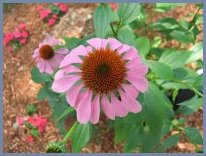
Perennials are plants that "die down" at the end of the season and
re-emerge in the springtime. I started with perennials like
Echinacea, Rudbeckia, and Scabiosa.
The garden grew quickly, and when I needed a release, I strolled
outside, looked at the flowers, butterflies, and bumble bees
gathering nectar. It soon became a spiritual experience, and I
felt more connected to nature.
When I bought a digital camera, the garden became more than a
release. The flowers and foliage became objects of absolute
beauty. Within a few months of buying the camera I took a thousand
pictures.
There is something raw in the nature of planting. Getting your
hands dirty in the garden is a liberating experience. Not only is
it legitimate exercise that helps develop muscle and
cardiovascular strength, it is a mind freeing joy, to plant and
watch the garden grow throughout the season.
Gardening can reduce symptoms of depression. The act of going to
a garden center, choosing a few (or many) plants, is rewarding.
The excitement builds during the drive home, and then the act of
planting is most enjoyable. Planting could turn glum into
contentment. And almost always, it relieves anxiety.
You can focus all your energy into pruning, digging,
transplanting, and laying soil and mulch. But the fun does not
stop there! Just like a human, plants need food! Fertilizing your
plants will help them grow faster, stronger, and promote blooms.
Results can be seen in a few weeks.
Gardening doesn't stop with plants. Stone or fiberglass statues
and birdbaths can be excellent supplements to a beautiful garden.
Brick pathways are also practical, visually appealing and are
relatively easy to install. As an added bonus place a stone or
teak bench facing the garden as a place to relax and unwind.
Working
at a garden center, I also learned about fertilizers, mulches,
soils, pest controls, tools, organics, adornments and more. I have
met people with various knowledge of gardening. All share one
thing in common: they all seek some kind of benefit from plants.
If you are short on space, live in an apartment with a balcony,
or tight on budget, container gardening is the way to go. You can
use plastic, clay and fiberglass planters or window boxes to plant
annuals for color all summer long. And like any garden, keep an
eye on the watering! Remember, too much water is just as bad (or
worse) than no water at all.
No matter your financial status, being involved with plants is
always a positive experience. The mental benefits are numerous.
Gardening is a natural stress reliever, it is great fun, and it is
a benefit to the earth.
More now than ever, gardening is used to help the mentally ill at
hospitals. These plant-to-heal programs are growing fast as the
benefits of gardening are uncovered. For patients, it is a great
way to socialize and get involved.
Pup was born in 1980 and was diagnosed with bipolar disorder in
1998.
|